How to Grow on Instagram: A Practical Guide for 2026
Growing on Instagram requires method, not luck. This practical guide covers profile optimization, algorithm insights, content strategy, hashtags, and Reels—everything you need to build a solid, measurable presence in 2026.


Contents 9 sections
- 1 Optimize Your Profile: The First Step to Growing on Instagram
- 2 How Instagram's Algorithm Works in 2026
- 3 Quality Content and Personal Style: How to Stand Out
- 4 Hashtag Strategy: Using Them Strategically in 2026
- 5 Engagement and Community: Growing on Instagram Together
- 6 Reels and Video Content: The Engine of Organic Growth
- 7 Measurable Goals and Editorial Plan: The Structure That Drives Growth
- 8 Frequently Asked Questions
- 9 Concrete Next Steps to Grow on Instagram
Growing on Instagram in 2026 is still possible, but the rules have changed. Publishing beautiful photos isn't enough anymore: the platform rewards creators who combine relevant content, consistency, and a concrete understanding of how the algorithm works. Those who improvise get inconsistent results. Those who follow a method build lasting presence.
The most common problem isn't a lack of ideas, but a lack of structure. People post without a defined frequency, use hashtags randomly, and neglect their bio. The result? A frustrating plateau where metrics don't budge. Yet a few strategic corrections can turn things around.
This guide covers the most effective practices for growing on Instagram sustainably: from profile optimization to Reels strategy, hashtag management, and community engagement. Every section is designed to be actionable immediately, without waiting for the perfect moment.
Optimize Your Profile: The First Step to Growing on Instagram
Before any content works, your profile needs to do its job. In a few seconds, a visitor decides whether to follow you or leave. Your Instagram bio is your first conversion tool: it must communicate who you are, what you offer, and why it's worth following you.
A bio that works for you
An effective bio answers three questions in fewer than five lines: who you are, what you do, and what followers gain by following you. Use keywords relevant to your niche - the algorithm indexes them. Include a clear call to action that links to your bio link (a tool like Linktree or a dedicated landing page). Avoid generic phrases like "beauty lover" or "passionate about travel": they're invisible in Instagram's search results.
Profile picture, name, and username
The "Name" field (separate from your username) is searchable: include your professional name or a relevant keyword, like "Marketing Consultant" or "Photographer NYC". Your profile picture should be recognizable even as a thumbnail - a clear face or simple logo works better than elaborate compositions. The ideal username is short, memorable, and consistent across your social channels.
An optimized profile isn't optional: it's the foundation for all other growth activities. Once that's in place, it's time to understand how the platform distributes content.
How Instagram's Algorithm Works in 2026
Instagram's algorithm isn't a single mechanism: each surface of the platform (Feed, Explore, Reels, Stories) has its own distribution criteria. Understanding them means you can orient your editorial choices more strategically.
The signals that matter most
For the Feed and Explore, the main signals are: engagement rate in the first hours after posting, content relevance to the user's interests, and historical relationship between accounts (comments, likes, DMs). A post that generates quick interactions gets an algorithmic boost; one that starts slow struggles to recover.
For Reels, the key metric is video completion rate - how many people watch it to the end. Saves and shares follow, weighing more than simple likes. The platform also favors original content over videos with watermarks from other apps (TikTok especially).
Publishing frequency and consistency
Consistency beats perfection. Posting three times a week regularly generates more traction than ten posts concentrated in one weekend. The algorithm favors active, predictable accounts. To learn what time to post on Instagram to maximize engagement, it's useful to analyze your account insights and test different time slots for at least four weeks.
Understanding the algorithm doesn't mean obsessing over it: it means using it as a map to navigate. With this awareness, the next step is building a solid content strategy.
Quality Content and Personal Style: How to Stand Out
Quality on Instagram isn't just about image resolution. It's about relevance, consistency, and recognizability. In a crowded feed, an account with a defined visual style and voice is remembered. A generic one is forgotten.
Define your style and niche
Before posting anything, answer these questions: who am I speaking to? What problem do I solve or what inspiration do I offer? What makes me different from other accounts in my niche? Your answers become the editorial filters guiding every content decision. A recognizable personal style - color palette, photography type, caption tone - builds familiarity and loyalty.
Formats to prioritize
In 2026, Instagram clearly rewards three formats:
- Reels: maximum organic reach, especially for new or growing accounts
- Carousels: high save rate, ideal for educational or multi-slide narrative content
- Stories: daily relationship tool with existing followers, not for acquisition
Captions and calls to action
A well-written caption extends post reading time and boosts engagement. Start with a strong hook in the first two lines (the only ones visible before "more"). End with an explicit call to action: a question, an invitation to comment, or a tip to save. Avoid empty captions like "Happy Monday" without context.
Content quality is necessary but not sufficient. Your material also needs to be found - and that's where hashtags and distribution come in.
Hashtag Strategy: Using Them Strategically in 2026
Hashtags aren't dead, but how they're used has changed. Inserting thirty generic hashtags and hoping doesn't work anymore. A strategic hashtag approach is selective and aligned with your niche.
How many hashtags to use and which ones
Instagram's own guidance, confirmed by independent tests, suggests a range of three to five relevant hashtags per post, woven naturally into the caption or first comment. Your selection should blend:
- Specific niche hashtags (10,000 to 500,000 posts) - where competition is manageable
- Mid-level industry hashtags (500,000 to 2 million posts)
- One personal branded hashtag (if you're building a brand)
Hashtags with tens of millions of posts (like #love or #instagood) don't drive qualified traffic: content gets lost in seconds.
Monitor hashtag performance
Every business or creator profile has access to insights per post. Check how many impressions come from these tags for each post. If a group consistently underperforms, replace it. Treat hashtag strategy as continuous experimentation, not a fixed setting.
Alongside hashtags, another factor affecting reach is relationships with other accounts - and that opens the chapter on engagement.
Engagement and Community: Growing on Instagram Together
Instagram remains, fundamentally, a social platform. Accounts that grow fastest aren't those posting most, but those engaging most strategically. This dynamic generates mutual visibility and strengthens algorithmic signals.
How to engage strategically
Specific practices:
- Reply to all comments you receive, especially in the first hours after posting
- Use Stories for questions, polls, and quizzes - they boost direct engagement
- Send personalized (not automated) DMs to new followers with authentic welcome messages
- Participate in comment conversations on accounts aligned with your niche
Collaborations and co-marketing
Collaborations with other creators (using Instagram's "Collab" format, which posts the same content on both profiles) are among the most effective ways to reach new, qualified audiences. Look for profiles with similar community size and relevant subject matter - not necessarily the largest, but most aligned with your target audience.
Building authentic relationships takes time but generates more stable growth than shortcuts. The natural complement to all this is a solid video strategy, starting with Reels.
Reels and Video Content: The Engine of Organic Growth
Reels remain the format with the highest organic reach on Instagram. For an account wanting to grow and reach new people, ignoring them is costly.
What makes a Reel effective
Top-performing Reels share certain characteristics:
- Visual or text hook in the first two seconds - users decide almost immediately whether to stay
- Relevant audio: using trending tracks increases the chance of appearing in recommended Reels
- Optimal length between 15 and 30 seconds for most niches (except tutorials or educational content)
- Captions: most users watch videos without sound
- Clear call to action at the end (save, share, comment)
Accelerate Reel distribution
When a Reel gains good traction in its first hours, the algorithm pushes it further. Some creators choose to signal their content with services like Instagram video views or Reel likes, to increase perceived relevance at launch. This is a tool to use alongside content quality, not instead of it.
Reels are powerful, but work better as part of an editorial plan with measurable goals. And that's where many accounts lack structure.

Measurable Goals and Editorial Plan: The Structure That Drives Growth
Growing on Instagram without clear goals is like driving without a destination. You might move forward, but you don't know where you're heading or if you're on the right path. Defining specific targets transforms Instagram activity from routine to strategy.
How to set realistic goals
Metrics to monitor depend on your account's stage:
- Accounts in early growth: reach, impressions, new followers per post
- Accounts consolidating: engagement rate, saves, profile visits
- Accounts focused on conversion: clicks to bio link, incoming DMs, website conversions
Building an editorial plan
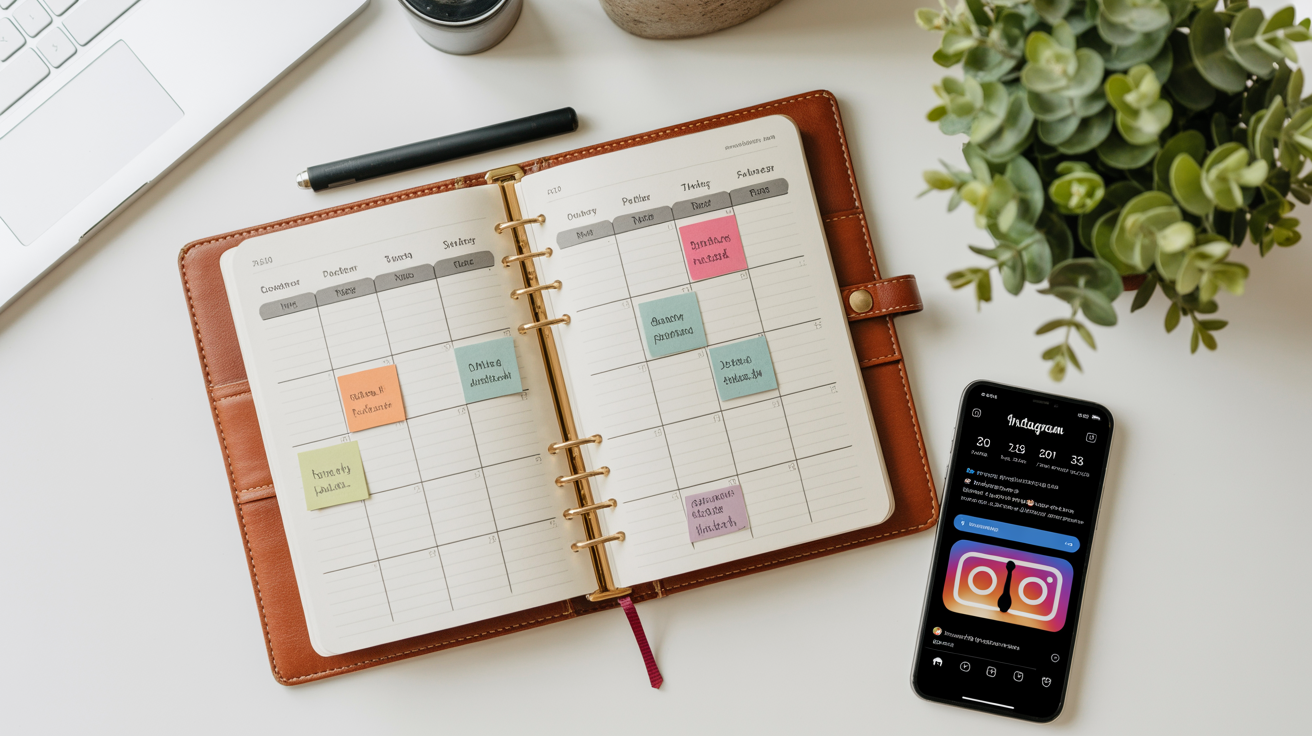
An editorial plan doesn't need to be rigid, but it must exist. Plan at least two weeks ahead: formats, topics, posting times. Leave room for spontaneous content and trending moments, but don't rely solely on improvisation. For deeper strategies, the guide on increasing Instagram followers with a structured approach offers a practical, replicable framework.
Those managing accounts in early phases may find it useful to boost their presence with targeted services: Instagram followers delivered gradually can strengthen social proof in early phases, facilitating subsequent organic interactions. For those targeting specific audiences, there are also options for followers tailored to specific niches.
With clear goals and a structured plan, every action becomes more effective and measurable. Before closing this guide, let's address the most common questions people ask about growing on Instagram.
Take your social presence to the next level
Likes, views, followers, reviews: pick the service that matches your goal. Instant start, secure payment, satisfied or refilled.
Frequently Asked Questions
How many posts per week do you need to grow on Instagram?
There's no universal number, but most experts and platform data indicate an optimal frequency of three to five posts weekly (including Reels and carousels). Consistency matters more than quantity: posting regularly for months produces better results than activity bursts followed by silence.
Do hashtags still work in 2026?
Yes, but with a different approach than the past. Three to five relevant hashtags specific to your niche work better than thirty generic ones. Priority should be relevance to your content and target audience, not hashtag usage volume.
How long does it take to grow on Instagram organically?
It depends on your niche, content quality, and consistency. Generally, an account following a structured strategy sees meaningful results after three to six months. The first months often serve as a learning phase to understand what works for your specific audience: it's not stalling, it's learning.
Do Reels work better than static posts for growing?
For organic reach to new users, yes: Reels consistently reach more people beyond your followers than static posts or Stories. For engaging existing followers, carousels and Stories remain highly effective. A balanced strategy combines all of them.
Is it useful to buy likes or followers to accelerate growth?
Used correctly, services like Instagram photo likes or followers can strengthen social proof of a new profile in early phases, facilitating organic engagement. They don't replace solid content strategy but can work as a complementary lever when starting from zero or wanting to boost a specific piece of content.
Concrete Next Steps to Grow on Instagram
This guide has covered the main levers for growing on Instagram in a structured way: profile optimization, algorithm understanding, content quality, hashtag strategy, community engagement, Reels, and editorial planning. None of these levers work in isolation - it's the combination that makes the difference.
For beginners, the advice is to start with the basics: optimize your profile, choose a clear niche, and start posting regularly. For those with an active but stalled account, it's worth analyzing existing data - insight by insight - to find where the chain breaks. Often it's just one point, and fixing it unlocks everything else.
You can also explore comparisons between major platforms for buying Instagram followers safely, if you're considering giving your profile an initial boost. Growth on Instagram requires method and patience - but those who invest both achieve results that last.
Julie Faure
Senior Writer — Social Media
✍️ Professional writer. Web content, SEO & brand content. Specialized in social media & digital marketing.
Julie supports creators, brands and entrepreneurs on their social media strategies and online visibility. She shares hands-on, field-tested advice here to help you understand algorithms, create content that genuinely engages, and turn social presence into a real business growth lever.
Related services
Buy Google Reviews French or International
Build a 5-star reputation on Google that reassures local prospects and converts fence-sitters into customers.
Buy Instagram Video Views
Boost your Instagram video view count and signal the algorithm that your content deserves to be promoted.
Buy Instagram Followers
Accelerate your Instagram profile growth with followers delivered naturally to establish credibility at first glance.
Related reads

What Time Should You Post on Instagram to Maximize Engagement? (2026 Guide)
You spend time perfecting your visuals, captions, and hashtags... but if you publish at the wrong moment, all that effort goes unnoticed. On Instagram, timing is a vastly underestimated lever - and yet it's decisive. Good news: there are time slots that statistically maximize reach and engagement.

Buy Instagram Reels Likes in August 2026
Buying Instagram Reels likes sends a strong signal to the algorithm and expands your organic reach. Discover how this approach works, who it's for, and how to integrate it into a solid strategy in August 2026.
Buy Instagram Likes from French-Speaking Accounts in August 2026
Buying Instagram likes from French-speaking accounts strengthens your credibility with a targeted Francophone audience. Learn how to choose a reliable platform, secure your order, and maximize your visibility impact in August 2026.
Buy Instagram Followers with BoostFollowers in August 2026
Growing your Instagram audience takes time and real strategy. Discover how BoostFollowers combines accelerated growth with organic best practices to build a sustainable following in August 2026.