Facebook engagement: 8 strategies that really make a difference
Facebook engagement determines the organic reach of every post. Discover 8 practical strategies to increase interactions, optimize your posting times, and get the most from the Facebook algorithm.

Contents 11 sections
- 1 Understand the Facebook algorithm before taking action
- 2 Strategy 1: Post at the right times
- 3 Strategy 2: Focus on the right content formats
- 4 Strategy 3: Build a consistent posting frequency
- 5 Strategy 4: Write calls to action that prompt a reaction
- 6 Strategy 5: Optimize visual content
- 7 Strategy 6: Manage comments to sustain momentum
- 8 Strategy 7: Analyze insights and adjust continuously
- 9 Strategy 8: Strengthen social proof—and understand Meta's terms of use
- 10 Implement a concrete action plan
- 11 Frequently asked questions
Facebook engagement has become one of the metrics most closely monitored by page administrators, community managers, and marketing teams. Likes, comments, shares, clicks - every interaction sends a signal to the algorithm, which uses it to personalize the distribution of your future posts. A page with few interactions remains difficult to see, even when it offers high-quality content.
The challenge is real: organic reach on Facebook has narrowed considerably in recent years. Pages that do not actively work on their interactions see their posts reach only a fraction of their audience. Conversely, those that apply clear principles - suitable formats, controlled posting times, content that prompts a reaction - maintain strong momentum without relying solely on paid advertising.
This guide presents 8 practical strategies for improving engagement on your Facebook page. No vague formulas: precise methods you can apply immediately, along with the algorithmic reasoning behind them.
Understand the Facebook algorithm before taking action
Trying to improve your Facebook engagement without understanding how the algorithm works means proceeding blindly. According to Meta's official documentation, the Facebook Feed is managed by an artificial intelligence system that selects, ranks, and distributes content using numerous signals: whom you usually interact with, what type of content you view, and how you reacted to similar content in the past. These models and their signals are dynamic and evolve frequently as the system learns.
In practical terms, the algorithm tries to predict which content you will find most relevant and valuable. It relies on both explicit signals (likes, comments, shares) and implicit signals (viewing time, scrolling). A conversation in the comments, a share accompanied by a personal message, or an active reaction - all of these generate richer signals than a simple passive like and may contribute to wider distribution. That said, Meta does not publish a fixed hierarchy of interaction types: the models vary by user and context.
Understanding this mechanism changes how you approach every post. Instead of asking, “What do I have to say?”, the right question becomes, “What reaction do I want to prompt?” This apparently simple nuance is the foundation of every strategy that follows. To expand your follower base and strengthen this initial social signal, also read our guide on how to gain more Facebook followers with proven strategies.
Strategy 1: Post at the right times
Posting time is one of the most underestimated levers. A post published while your audience is inactive accumulates few interactions in the first few minutes - yet this initial window is crucial. Low early engagement can weigh on the post's subsequent distribution.
Identify your personalized time slots
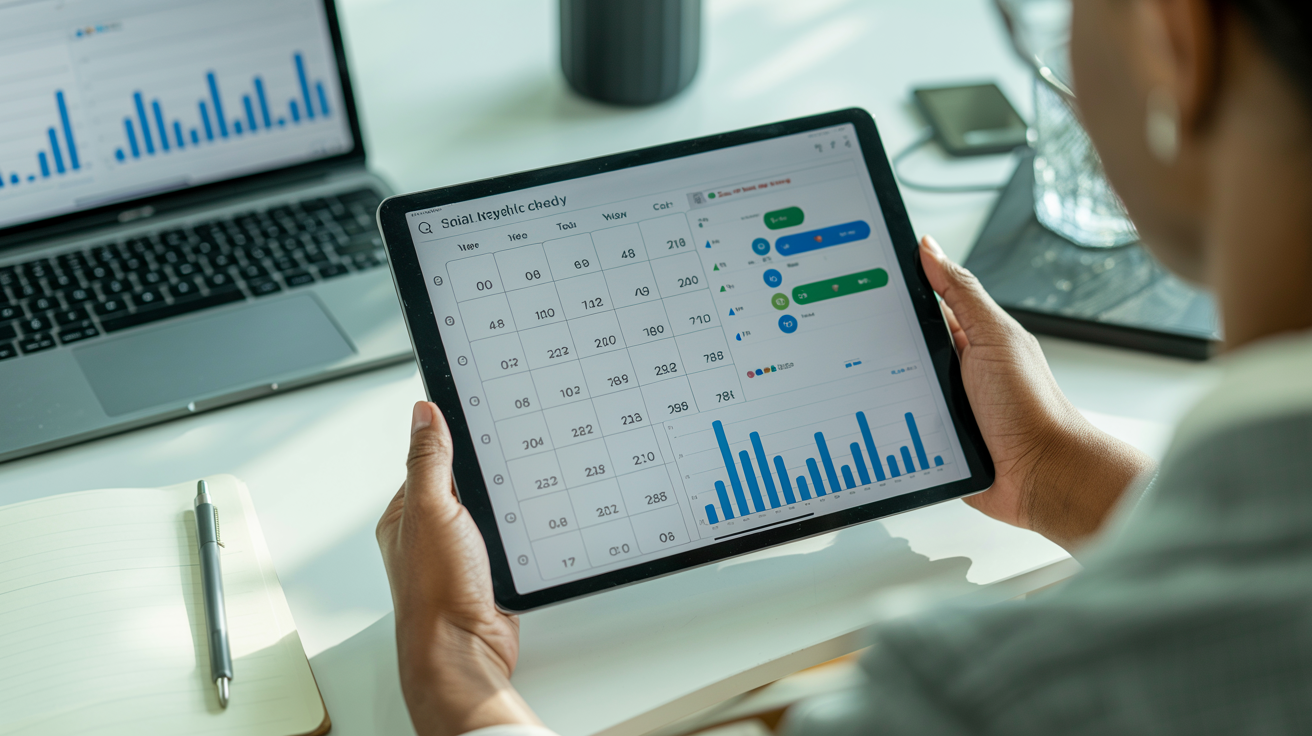
Instead of following generic averages, analyze your page data directly through your Facebook Page Insights in Meta Business Suite. There, you can view metrics on reach, engagement, and post performance to understand what resonates with your audience. This data is specific to your community and far more reliable than any industry-wide statistic.
As a general rule, B2C pages see good results in the middle of the week and early evening, while B2B pages appear to perform better in the morning. But these trends are only starting points - your own analysis must take priority.
Test and validate over 4 weeks
Define 3 time slots to test over one month. Publish comparable content (same format and length) at each of these times. Then compare the average engagement rate for each slot. This empirical approach produces much more precise results than any generic recommendation. The same logic applies to other platforms: our article on the best times to post on Instagram explains a similar method.
Strategy 2: Focus on the right content formats
Not all formats perform equally on Facebook. The video format benefits from favorable organic momentum, and Meta has considerably simplified its approach in this area. Since mid-2025, Meta has announced that all videos shared on Facebook will now be posted as Reels, with no length or format restrictions - the creation flow has been unified to simplify publishing. The technical distinction between a “native video” and a “Reel” therefore no longer applies.
Video and Reels: the format to prioritize
A video with embedded subtitles captures attention even when the sound is off - which accounts for a large proportion of mobile views. Meta also says that it is committed to prioritizing original content in Feed and Reels while reducing the reach of unoriginal content: duplicated videos, videos reshared without added value, or content that reuses another creator's work with only minor changes are explicitly deprioritized. Focusing on originality is therefore a fundamental condition for visibility. To accelerate the visibility of your videos on the platform, buying views for your Facebook videos can provide an additional social signal - however, read the warning in strategy 8 about Meta's terms of use before doing so.
Images remain relevant, provided they are thoughtfully produced: an original visual or well-designed infographic significantly outperforms a soulless stock photo. External links structurally receive less organic reach because Facebook seeks to keep users within its ecosystem.
Text only: a format not to overlook
Purely text-based posts can generate a high volume of comments when they ask a direct question or share a strong opinion. This format is particularly effective for creator pages and topic-based communities. The goal is to write text compelling enough to trigger a response, not to fill a character quota.
Strategy 3: Build a consistent posting frequency
The Facebook algorithm uses consistency as a relevance signal. A page that posts erratically - very active one day and silent for several weeks - loses the engagement momentum it had built. Conversely, a stable cadence, even a modest one, keeps the page visible to its audience.
For most pages, a frequency of 3 to 5 posts per week represents a reasonable balance between visibility and content quality. Posting more without improving quality can dilute average engagement per post. Quality consistently takes precedence over quantity.
A monthly editorial calendar - even a simple spreadsheet - profoundly changes this dynamic. It lets you anticipate key moments, vary formats, and avoid the creative blocks that lead to filler content. Meta Business Suite includes a built-in post-scheduling feature accessible from business.facebook.com.
Strategy 4: Write calls to action that prompt a reaction
Content without a call to action leaves the audience passive. Effective Facebook calls to action are not commercial commands - they are invitations to participate. The distinction is fundamental.
Posts that ask an explicit question tend to generate more comments than those that do not - and every comment enriches the signals sent to the algorithm about the content's relevance.
Types of calls to action that work
- The open question: “What has your experience with this topic been?” prompts varied answers and conversations between members.
- The binary choice: “Option A or Option B - tell us in the comments” generates quick participation, even among less active followers.
- The invitation to share: “If this helped you, share it with someone who needs it” - phrased as a helpful gesture, not a request.
- Sentence completion: “For me, the best advice I have received on this topic is...” - a particularly effective format in topic-based communities.
The objective always remains the same: reduce the friction between reading and reacting. The easier it is to formulate a response, the more the participation rate can increase. To further amplify the visibility of your best posts, buying Facebook likes for your posts can strengthen the initial social signal - however, read the warning in strategy 8 before doing so.
Strategy 5: Optimize visual content
Facebook remains a highly visual platform. A poor visual - badly framed, with unreadable text or an inconsistent color palette - directly harms the click-through rate and therefore overall engagement. Visual content is often the first filter users apply before even reading the post's text.
The principles of an effective visual
- Follow the recommended formats: 1200 x 630 px for link images and 1080 x 1080 px for square visuals. Formats and dimensions for Reels evolve, so regularly consult the Meta Help Center on Facebook Reels requirements.
- Limit the amount of text on the image so that it does not harm readability or distribution.
- Maintain a recognizable visual identity: consistent colors, typography, and style from one post to the next improve recall.
- Choose original images over generic stock photos - authentic visuals generally generate more emotional reactions.
Test visual variants
If you manage several similar posts, test two versions of the same visual over comparable periods. Meta Business Suite data will help you identify which one generates the most impressions and clicks. This simple, systematic approach improves the account's overall performance over time.
Strategy 6: Manage comments to sustain momentum
Responding to comments is not merely an optional courtesy - it is a strategic decision. Every response from your page generates a new notification for the author of the original comment, who may then return to interact. This cycle extends the post's lifespan and keeps it eligible for broader distribution.
Respond within the first few hours after publishing. The algorithm considers the recency and frequency of interactions as relevance indicators. A quick response can therefore help maintain engagement momentum. Ask a question in your response when it feels natural - this can prompt a second exchange and extend the momentum further.
For posts with strong potential, also consider buying shares for your Facebook posts: a share exposes your content to entirely new audiences outside your current follower network. However, read the warning in strategy 8 before doing so.
Strategy 7: Analyze insights and adjust continuously
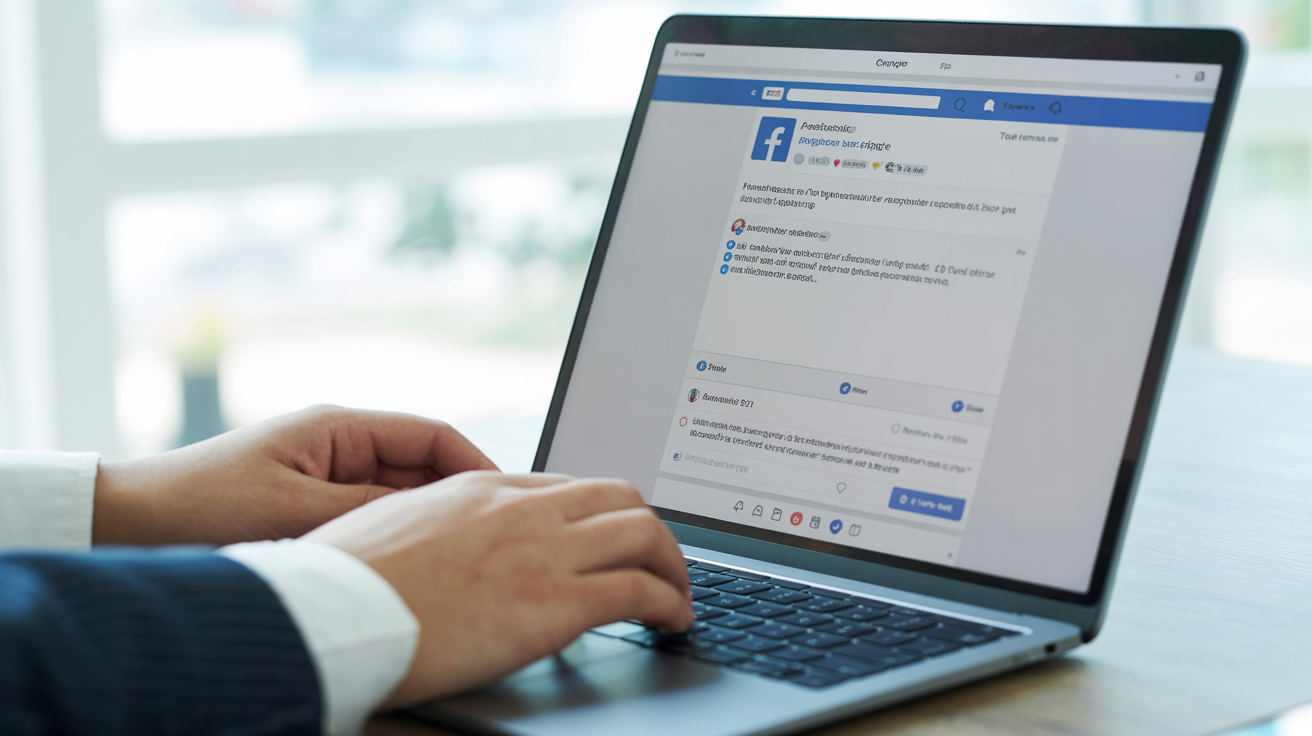
The Facebook data and analytics available in Meta Business Suite are the most powerful tools at your disposal - and among the least used. Without regular analysis, you publish without knowing what truly works. By selecting “Insights” and then “Content” in Meta Business Suite, you can view and filter metrics to obtain an overview of your posts' performance.
The metrics to monitor first
- Engagement rate: calculated by dividing the total number of interactions (likes, comments, shares, clicks) by the post's reach, then multiplying by 100. This metric varies significantly by industry, audience, and content type - there is no universal threshold that applies to every page.
- Organic reach: a direct indicator of the distribution granted by the algorithm without advertising investment.
- Click-through rate (CTR): measures the effectiveness of your visuals and copy.
- Video views: especially the retention rate (how many viewers continue beyond the first few seconds).
Build a monthly dashboard
Export your data once a month. Compare your best-performing posts with your worst-performing ones. Identify the variables that distinguish them: format, time, text length, call-to-action type, and the presence of a visual. These observations form the basis of continuous improvement. Your Page Insights also provide information about your audience demographics - valuable data for refining your organic content and, where applicable, your paid campaigns. To explore video-analysis logic on social platforms in greater depth, our guide to Facebook views and how to optimize them provides useful additional insight.
Strategy 8: Strengthen social proof - and understand Meta's terms of use
Facebook engagement often follows a volume-based logic: posts that already have many interactions can attract more because the algorithm perceives them as relevant and users are naturally drawn to what appears popular. This dynamic, known as social proof, plays a role in organic distribution.
For a page that is launching or trying to break through an engagement plateau, expanding its follower base with active profiles is one possible avenue. Buying French Facebook fans gives your page an initial French-speaking audience. For international visibility, buying international Facebook fans expands your page's geographical reach.
Important point to consider: before using these practices, it is essential to understand the framework defined by Meta. The Meta Community Standards on inauthentic behavior strictly regulate artificial amplification practices. Meta also states in its rules against spam that it may take restrictive action against accounts that purchase or exchange platform assets. BoostFollowers.io's services offer real fans and interactions - but you are responsible for verifying that their use complies with the terms currently applicable to your account and page type at the time of purchase.
These levers do not replace a solid content strategy - they can amplify its effects when used in compliance with the platform's rules. A page with a substantial follower base and regular, high-quality content generally has a better chance of generating organic interactions than a page with an empty counter. Consistency between social proof and editorial production is what makes this approach sustainable.
Implement a concrete action plan
The 8 strategies presented here form a coherent system. Applied individually, each can produce results. Combined, they create cumulative momentum in which every lever strengthens the others: the right posting times maximize initial reach, polished visuals increase clicks, calls to action generate comments, and insight analysis enables continuous refinement.
To get started without spreading yourself too thin, choose two priority actions based on your current situation. If your engagement rate is low despite regular posting, begin by revising your calls to action and analyzing your insights from the last 30 days. If your page lacks active followers, focus first on content quality and posting consistency.
Improving Facebook engagement is an iterative process. Pages that apply these methods rigorously and consistently generally see measurable progress over several weeks - with no guaranteed timeframe, because results depend on the industry, audience, and competition. Editorial consistency is the only factor you control completely.
Ready to boost your presence?
Place your order in 2 minutes, drip-feed delivery, credible profiles, retention guarantee.
Frequently asked questions
How do you calculate the engagement rate on a Facebook page?
The engagement rate is calculated by dividing the total number of interactions (likes, comments, shares, clicks) by the post's reach, then multiplying by 100. For example, 150 interactions for a reach of 5,000 people gives a rate of 3%. You can find this data directly in Meta Business Suite without calculating it manually. Note that this rate varies greatly depending on the industry, page size, and content type - there is no universal benchmark.
What is the ideal posting frequency on Facebook?
For most pages, posting between 3 and 5 times per week represents a reasonable balance. Below that, the page loses consistency. Above that, quality tends to decline if editorial resources cannot keep pace, and average engagement per post may fall. Adjust this frequency according to your actual resources.
Why is my organic Facebook reach declining?
Organic reach depends directly on the engagement signals generated by your recent posts. If those posts received few interactions, the algorithm may reduce distribution of subsequent ones. Other factors also play a role: competition for space in Feed, saturation in your industry, or content deemed unoriginal under Meta's current criteria. Revising your calls to action and posting times and improving the original quality of your content is often the most direct way to reverse the trend.
Do Reels really perform better than traditional Facebook posts?
In 2025, Meta unified video creation on Facebook: all videos are now shared as Reels, without length or format restrictions. Meta also says it prioritizes original content in distribution, whether in Feed or through recommendations. In practice, original and engaging video content will receive better distribution than duplicated content or content with little added value, regardless of format.
Should you respond to every comment on your Facebook page?
Responding to comments quickly - especially within the first few hours after publishing - has more strategic impact than aiming for exhaustive coverage. Prioritize comments that can lead to a second exchange, such as open questions and shared opinions, and reply with a new question or additional information. This practice extends the post's lifespan and generates signals of recent activity that the algorithm considers in its ranking.
Julie Faure
Senior Writer — Social Media
✍️ Professional writer. Web content, SEO & brand content. Specialized in social media & digital marketing.
Julie supports creators, brands and entrepreneurs on their social media strategies and online visibility. She shares hands-on, field-tested advice here to help you understand algorithms, create content that genuinely engages, and turn social presence into a real business growth lever.
Related services
Buy French Facebook Followers
Grow your Facebook page with real french followers. Targeted delivery strengthens your local relevance and engagement.
Buy International Facebook Followers
Grow your Facebook page globally with active followers from around the world, delivered gradually and without requiring account access.
Buy Facebook Video Views
Boost your Facebook videos with real views that increase visibility in the news feed and drive engagement.
Related reads

Buy Facebook Views: Complete Guide in August 2026
Buying Facebook views is a growth strategy used by thousands of creators and brands to accelerate the visibility of their videos. This complete guide explains how to do it intelligently in August 2026.
Buy Facebook post likes: complete guide in 2026
Want to buy Facebook post likes and increase the visibility of your posts? This guide explains how it works, what it costs, and what benefits it gives your page - updated in 2026.

How to Get More Facebook Followers: 10 Proven Tips
Want to grow your Facebook page but not sure where to start? This guide covers 10 proven, practical strategies to get more Facebook followers — from optimizing your page to creating content that actually gets shared.
TikTok Analytics: how to analyze your performance
Mastering TikTok Analytics means understanding why some videos take off while others do not. This guide explains every key metric—retention, traffic sources, demographics—to turn your data into concrete decisions and refine your content strategy.