How to Increase Spotify Engagement: 7 Strategies That Work
Learn 7 proven strategies to boost Spotify engagement: optimize your profile, master playlists, use Canvas, drive traffic from other platforms, build social proof, track metrics, and turn events into fan moments.


Contents 9 sections
- 1 1. Perfect Your Metadata, Profile, and Pitch
- 2 2. Strategy for Playlists—Without False Promises
- 3 3. Use Canvas to Enhance the Listening Experience
- 4 4. Drive Qualified Traffic From Other Platforms
- 5 5. Build Credible Social Proof
- 6 6. Monitor With Spotify for Artists, Marquee, and Showcase
- 7 7. Turn Releases and Live Events Into Moments
- 8 A Simple 30-Day Plan
- 9 Frequently Asked Questions
If you're looking for how to increase engagement on Spotify, start by tracking actions that signal genuine listener interest: repeat plays, saves, playlist adds, shares, and follows. Spotify doesn't publish the complete algorithm recipe, and no single tactic guarantees placement. However, Spotify for Artists lets you monitor behaviors that show listeners didn't just skip after one play - they came back.
Many artists invest heavily in production, then improvise the release. A track drops with an incomplete profile, a late pitch, and no strategy to turn first plays into lasting listener relationships. In a catalog where new music arrives constantly, sound quality remains essential, but presentation and distribution matter just as much.
Here are seven concrete strategies to build stronger Spotify engagement. They combine profile optimization, playlist strategy, visual content, external traffic, data analysis, and community building. The goal isn't finding an algorithmic shortcut - it's giving real listeners more reasons to play, save, and return.
1. Perfect Your Metadata, Profile, and Pitch
The metadata you distribute with your release must be accurate: track title, primary artists and features, songwriters, language, release date, and track version. Correct metadata prevents misattribution and ensures Spotify displays your music properly. Don't overload titles with keywords or pick a genre just to chase a larger audience.
Genre, mood, culture, and the story behind your track are best conveyed in your Spotify for Artists pitch. The platform recommends releasing early and submitting your pitch at least seven days before launch. The form gives editors the context they need to understand your music, though it doesn't guarantee playlist placement.
Pre-release checklist
- Credits and artist linking: Verify artist names, roles, and profiles with your distributor.
- Spotify profile: Update your bio, photos, social links, and Artist Pick.
- Pitch: Describe the sound, target audience, creative context, and your promotion plan.
- Timeline: Build in buffer time to fix errors before your release date.
Followers matter in this phase too. Spotify confirms that new releases can appear in the Release Radar of people who follow or listen to you. Ask for follows when interest peaks: after a video drop, concert announcement, or a listener saves your track.
2. Strategy for Playlists - Without False Promises
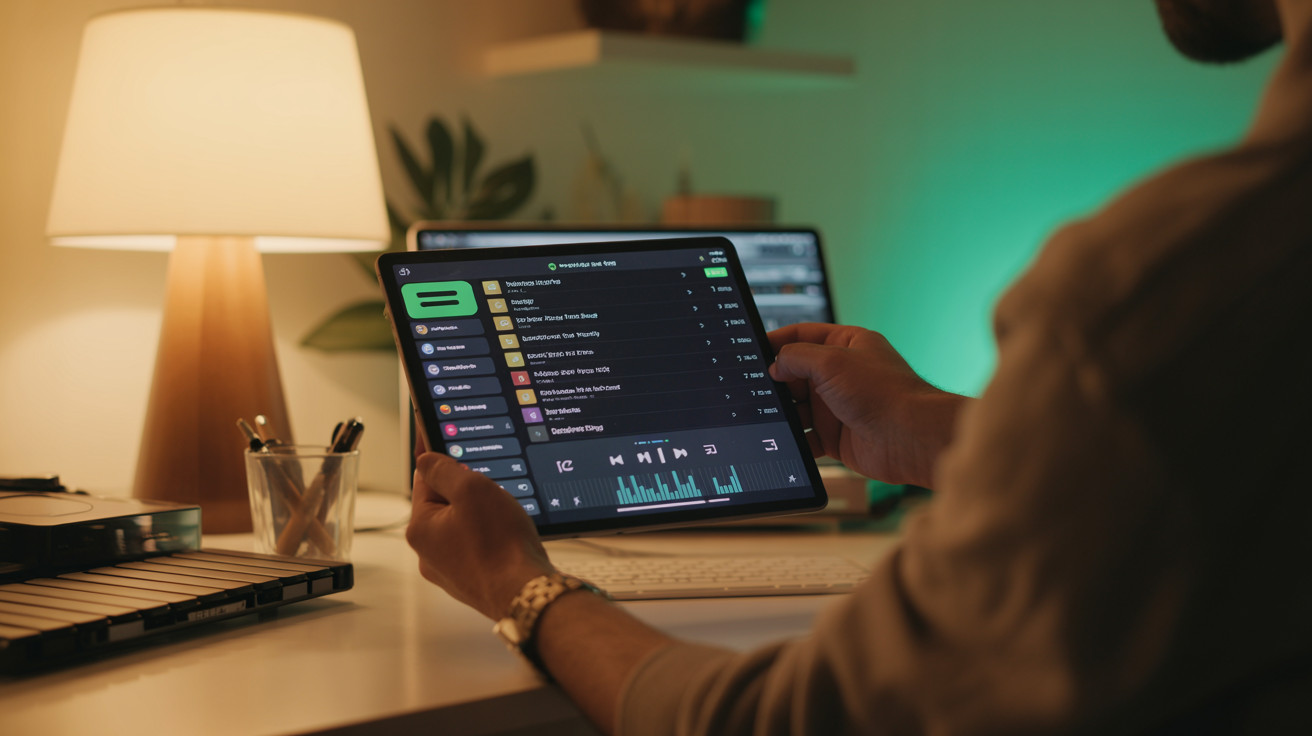
There are three main playlist pathways: Spotify's editorial playlists, personalized recommendations, and user-created or curator playlists. Each requires a different approach.
Spotify editorial playlists
Use the official pitch before launch. Present your track with precise, verifiable information: influences, instrumentation, target territory, planned campaigns, and any early signals outside Spotify. Generic text like "future hit" doesn't help an editor understand where your track fits.
Personalized playlists
Release Radar, Discover Weekly, and mixes are tailored to each listener's history. You can't buy placement in these. You can attract a relevant audience, track saves and playlist adds, then double down on campaigns that drive genuine plays.
Independent curator playlists
Target curators whose editorial vision actually matches your track. Check their follower growth, track consistency, and stream sources. Reject any guarantee of placement or stream volume: Spotify explicitly states that paid services guaranteeing streams or playlist placement aren't legitimate and can result in track removal.
3. Use Canvas to Enhance the Listening Experience
Canvas is a three to eight-second looping visual that appears on mobile during playback. It should extend your track's world, not distract from it. Spotify reports that quality Canvas can boost shares, saves, and profile visits - though impact varies by content. The official Canvas metrics guide lets you track views and compare your results.
To create a useful Canvas:
- echo the visual language of your cover art or music video ;
- design a smooth loop readable on small screens ;
- avoid lengthy promotional messages ;
- test different directions across different releases ;
- compare views, shares, and saves in Spotify for Artists.
Canvas isn't a guaranteed ranking factor or a substitute for great music. It's an extra narrative layer. Its value shows up in your data, not in general claims.
4. Drive Qualified Traffic From Other Platforms
Some Spotify demand flows from TikTok, Instagram, YouTube, media, live shows, and private communities. The smart goal isn't maximum clicks - it's bringing people likely to actually listen to your track.
TikTok and Reels: create a natural path to Spotify
Pick a memorable snippet, show the creation story, and make your track easy to find. A short-form video that works can drive searches and plays, though it doesn't guarantee Spotify amplification. Use a clear link in your bio and compare audience spikes with stream sources in Spotify for Artists.
To build this channel, see our guide on methods for increasing TikTok views without sacrificing audience quality.
YouTube: build a lasting presence
A music video, live session, or making-of can keep recruiting listeners weeks after launch. Put your exact track name in the title and description, link to Spotify, and pin a useful comment. Our guide to promoting a music video on YouTube covers this in detail.
Email and communities
An email list, Discord server, or private channel gives you direct access to already-interested people. Announce your release without oversending, then offer one simple action: listen, save, or add the track to a personal playlist if they like it. Direct relationships are more valuable than anonymous volume.
5. Build Credible Social Proof
Visible numbers influence first impressions, but they don't prove listener loyalty or track quality. Strong social proof combines consistent metrics with observable signals: comments, shares, relevant playlists, live attendance, and steady listener growth.
If you explore external promotional solutions, always verify how they work, their terms, and whether they make algorithmic promises. Our pages on Spotify followers and Spotify plays outline available options. They should complement your content and acquisition strategy - never replace finding genuinely interested listeners.
Don't buy automated streams and don't pay for guaranteed playlist placement. Spotify adjusts metrics when it detects artificial activity and can take action on affected tracks. The only sustainable foundation is an audience choosing to listen.
6. Monitor With Spotify for Artists, Marquee, and Showcase
Spotify for Artists does more than show total stream counts. Analyze listeners, streams per listener, saves, playlist adds, territories, and discovery sources. The official page on engagement data explains how to read these metrics.
Compare each campaign over a set period:
- which source brought new listeners ;
- which tracks earned saves or repeats ;
- which regions deserve dedicated content or budget ;
- which action created lasting results after the campaign ended.
Marquee and Showcase
Marquee is a sponsored full-screen recommendation for new releases. Showcase places a sponsored banner on the home page and can support both new singles and catalog tracks. Both target listeners likely to be interested based on their listening behavior. Availability and eligibility vary by market and audience size; current terms are in the Spotify campaigns documentation.
Start with a clear goal - like reactivating past listeners or introducing a new single. Then measure streams after exposure, saves, and playlist adds. A successful campaign teaches you something, even if the raw volume is modest.
7. Turn Releases and Live Events Into Moments
A concert, live session, or exclusive premiere creates connection no dashboard replaces. These moments can also drive fans to follow your profile, save a playlist, or replay a track. They don't always produce identical results: track which cities and periods show audience growth after events.
Connect live shows to Spotify
- add your Spotify profile to event pages and confirmation emails ;
- create a setlist playlist before the show and refresh it after ;
- feature your release or playlist with Artist Pick ;
- use Countdown Pages and Clips if your account qualifies ;
- ask fans to follow when they're already engaged.
Countdown Pages let you centralize pre-saves, short videos, track listings, and a countdown to an upcoming album. They're better suited than inventing exclusivity outside Spotify's real features.
A Simple 30-Day Plan
Pick one release and apply all seven levers in order. Week one: fix your profile, credits, and timeline. Week two: finalize your pitch, Canvas, and short-form content. Week three: reach out to a few relevant curators and prep your direct channels. Week four: review stream sources and decide what to repeat.
Spotify engagement builds through accumulation: clear presentation gets attention, smart targeting brings the right people, and consistent connection makes them want to return. Keep tactics that create willing listens and drop those that only add numbers.
Take your social presence to the next level
Likes, views, followers, reviews: pick the service that matches your goal. Instant start, secure payment, satisfied or refilled.
Frequently Asked Questions
Which metrics should I track to measure Spotify engagement?
Track streams per listener, saves, playlist adds, followers, stream sources, and how they shift after each promotional action. No single number tells the full story. A joint increase in replays and intentional actions is more telling than a one-time stream spike.
How long does it take to see results?
A campaign can show movement in days, but loyal listeners build over multiple releases. Set consistent comparison windows - like 7, 28, and 90 days - then separate campaign impact from baseline trend.
Can TikTok really drive more Spotify streams?
Yes - a strong video can spark searches and extra plays. Impact depends on who you reach, how easily they find your track, and whether the song holds their attention. A viral video doesn't guarantee saves or algorithmic push.
Should I release a single every four to six weeks?
That pace works for some teams, but it's not a Spotify rule. Choose a rhythm you can sustain without compromising music, visuals, or promotion. One well-executed release beats a string of rushed drops.
Do followers directly impact the Spotify algorithm?
Spotify doesn't present follower count as a guaranteed ranking lever. Following an artist does increase chances of discovering new releases, especially via Release Radar. An authentic follower base can boost initial release reach - but it won't guarantee amplification.
Julie Faure
Senior Writer — Social Media
✍️ Professional writer. Web content, SEO & brand content. Specialized in social media & digital marketing.
Julie supports creators, brands and entrepreneurs on their social media strategies and online visibility. She shares hands-on, field-tested advice here to help you understand algorithms, create content that genuinely engages, and turn social presence into a real business growth lever.
Related services
Buy Google Reviews French or International
Build a 5-star reputation on Google that reassures local prospects and converts fence-sitters into customers.
Buy Instagram Video Views
Boost your Instagram video view count and signal the algorithm that your content deserves to be promoted.
Buy Instagram Followers
Accelerate your Instagram profile growth with followers delivered naturally to establish credibility at first glance.
Related reads

Buy Spotify plays safely - Complete guide for August 2026
Want to buy Spotify plays without risking your account? This guide analyzes safe methods, the risks of stream bots, and how to choose a reliable service to grow your music on Spotify in August 2026.

Buy Spotify Followers: Safe Packages in August 2026
Discover how to buy Spotify followers safely, compare trusted packages, and grow your listener base without compromising account security. Complete guide with current pricing and best practices for August 2026.

X (Twitter) algorithm: how the For You feed works
X’s (Twitter’s) “For You” feed is anything but random: an artificial intelligence-based algorithm analyzes your interactions, post recency, and behavior to personalize every timeline. Learn how this mechanism works and which editorial levers you can use.
Snapchat algorithm: how do Discover and Spotlight work?
Understanding the Snapchat algorithm is the key to gaining visibility on Discover and Spotlight. This article explains the ranking signals documented by Snapchat, the differences between the two spaces, and practical ways to adapt your content strategy.